PHP settings
Finding the correct php.ini
Create a temporary PHP file (for example info.php) in your NADA web folder:
<?php phpinfo(); ?>Open it in the browser and note Loaded Configuration File. Edit that php.ini, then delete info.php from the server.
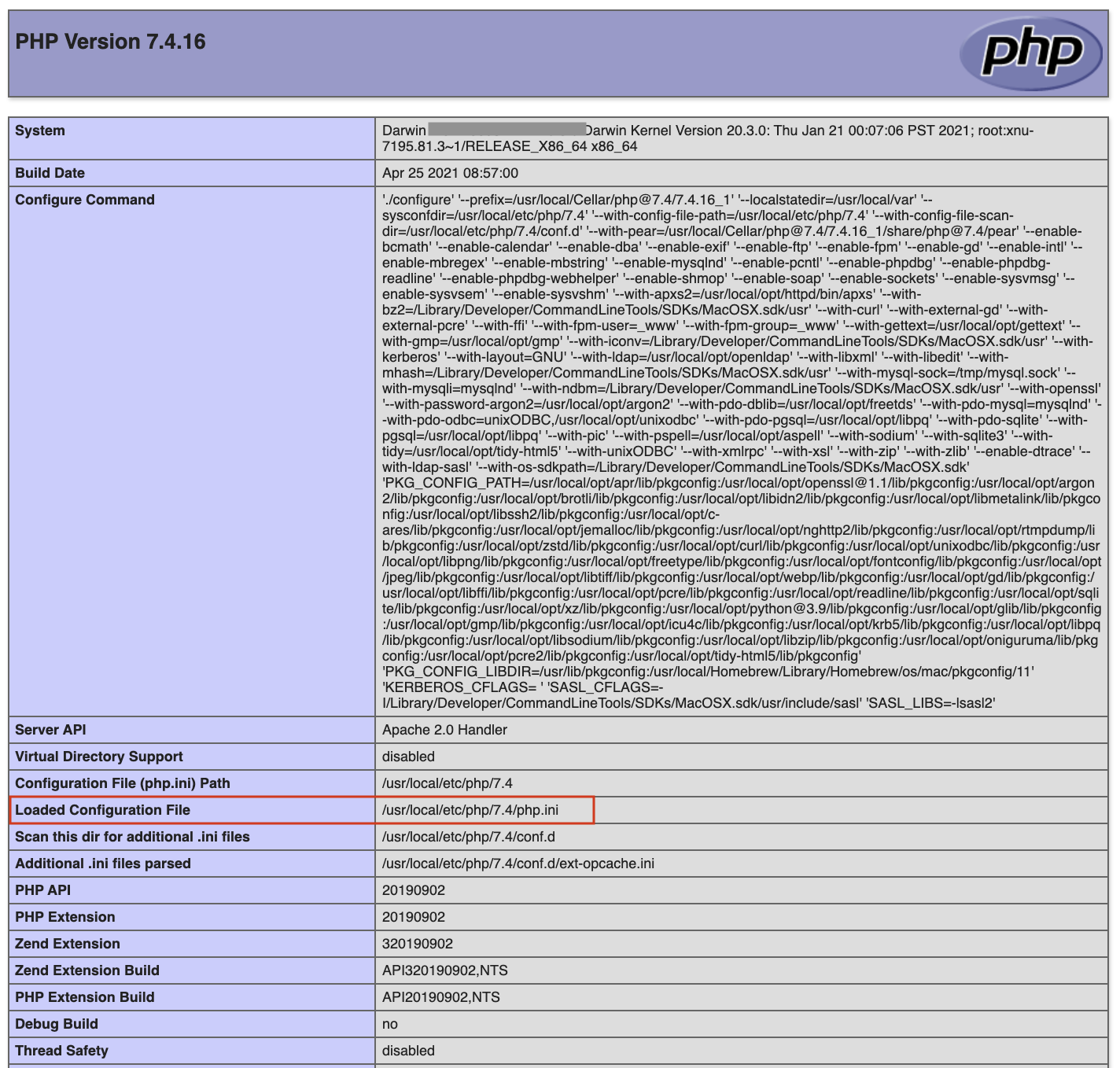
File upload limits
By default PHP often allows only small uploads (for example 2MB). For large data files, raise both of these together:
upload_max_filesize = 800M
post_max_size = 800M
post_max_size must be at least as large as upload_max_filesize.
Time zone
Set your site’s time zone (list of time zones):
date.timezone = "America/New_York"Execution time and memory
max_execution_time = 300
memory_limit = 128M
Increase further if large imports or API jobs time out.
Enable PHP extensions
NADA requires:
- xsl
- xml
- mbstring
- mysqli — if using MySQL or MariaDB
- sqlsrv — if using Microsoft SQL Server (Install with SQL Server)
Use the extension that matches your database choice (MySQL/MariaDB or SQL Server — not both required).
Minimum PHP version: 7.4 · Recommended: PHP 8.x
Windows
Recommended: use PHP Manager for IIS to register PHP and enable extensions — see Installation (Windows) — Install PHP.
You can also edit php.ini directly. Enable extensions with .dll names (exact names depend on your PHP build):
extension=php_xsl.dll
extension=php_mbstring.dll
extension=php_mysqli.dll
Restart IIS or recycle the app pool after saving (or use PHP Manager’s refresh). See Installation (Windows).
Linux
Prefer your distribution’s packages / phpenmod, for example:
sudo apt install php-xsl php-xml php-mbstring php-mysql
# or enable modules if already installed:
sudo phpenmod xsl mbstring mysqli
sudo systemctl restart apache2
If you edit php.ini directly, module lines typically look like:
extension=xsl
extension=mbstring
extension=mysqli
See Installation (Linux).